
Skip to content
MerryQuery
NewFive classroom tools co-designed with K–12 teachers in ExLAIM 2026

AI help that stays grounded in your course.

MerryQuery is an AI learning platform from NC State. Students get step-by-step answers that cite their instructor's own materials. Teachers decide how much the AI reveals, see where students struggle, and plan, practice, and give feedback from one course toolkit.

Best Technical Demonstration Award, AAAI 2025

Teacher workspace
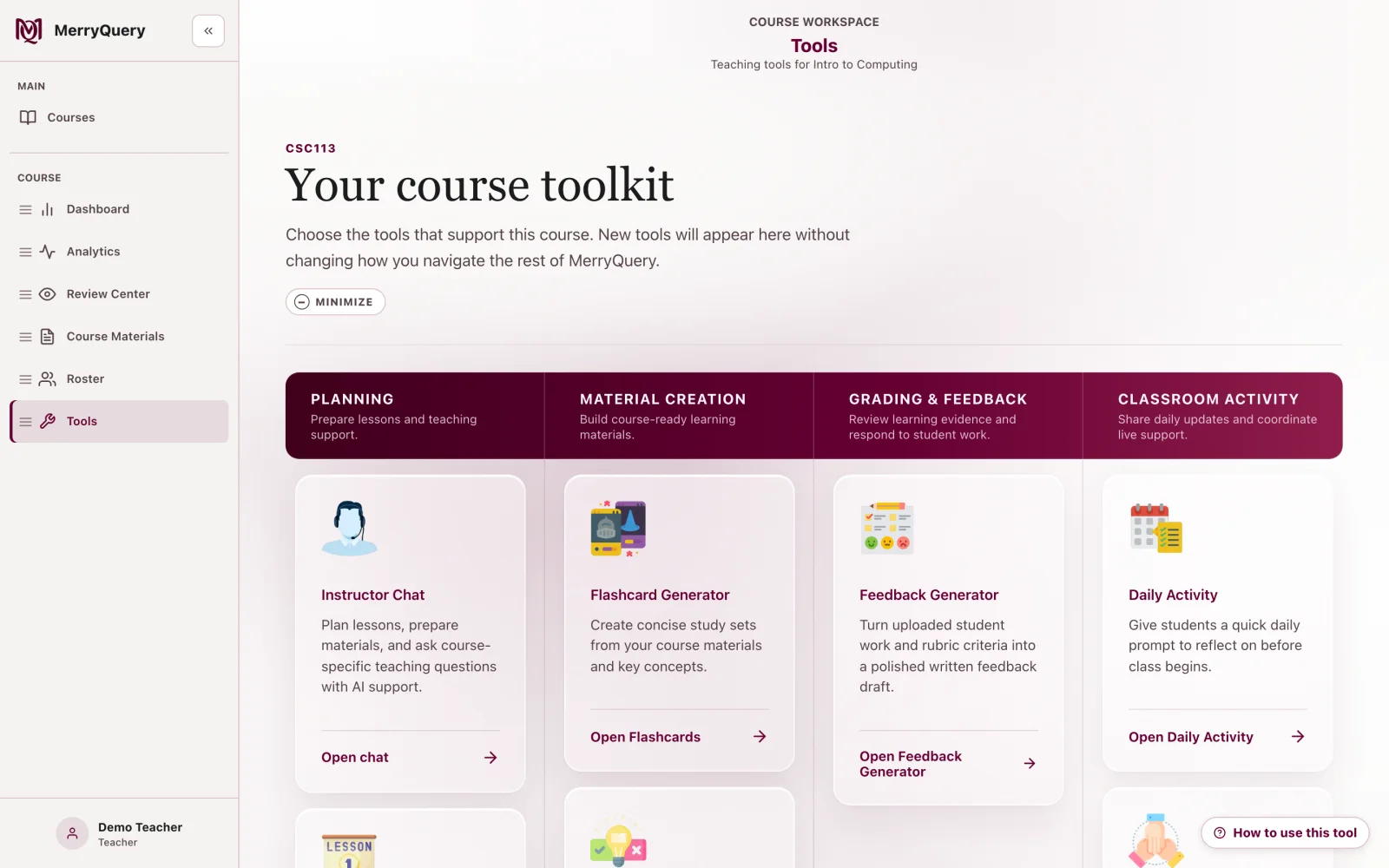
MerryQuery teacher workspace: the course sidebar and the course toolkit, grouped into planning, material creation, grading and feedback, and classroom activity.
Student viewCited · Step-by-step · Course-aware
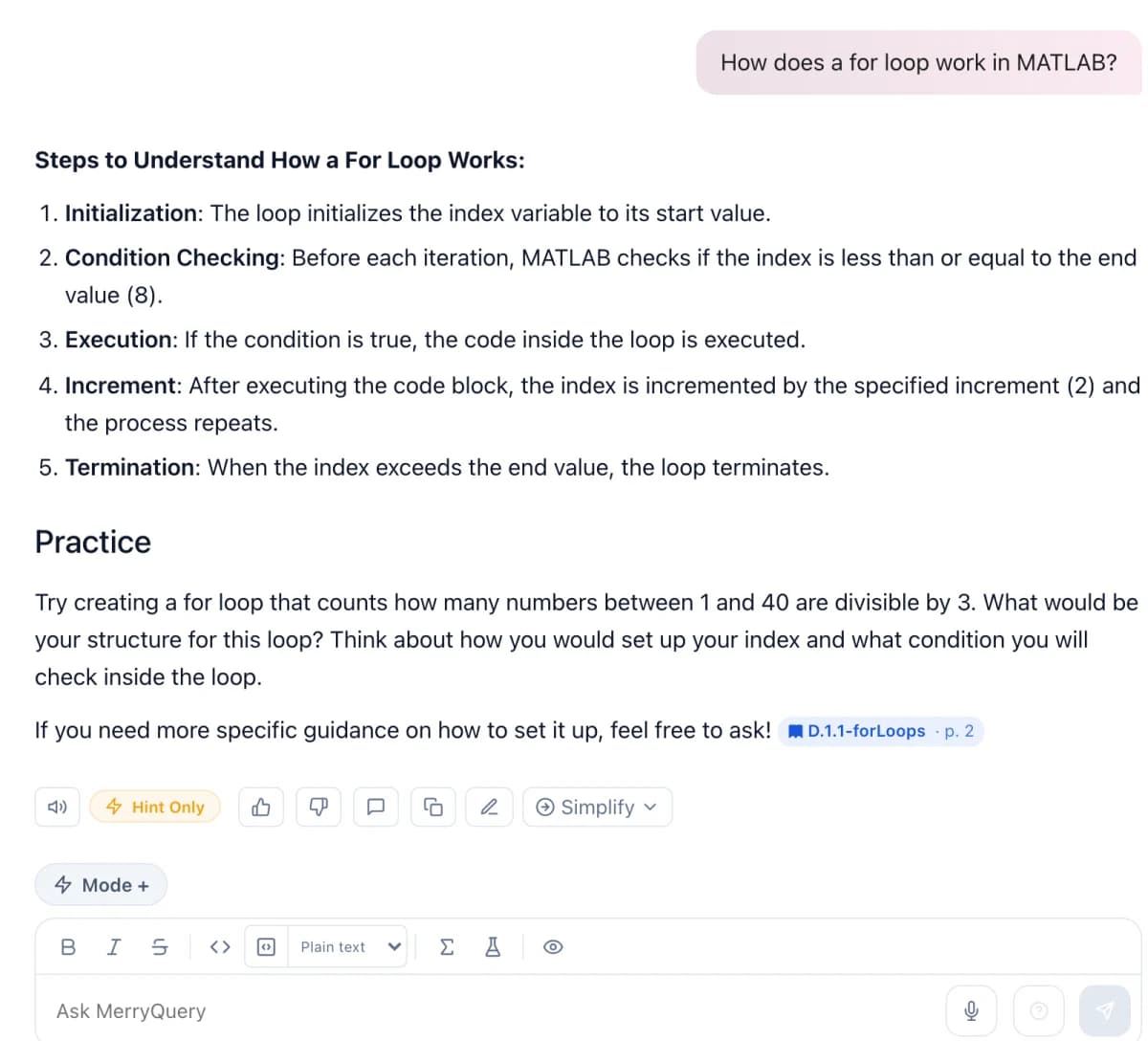
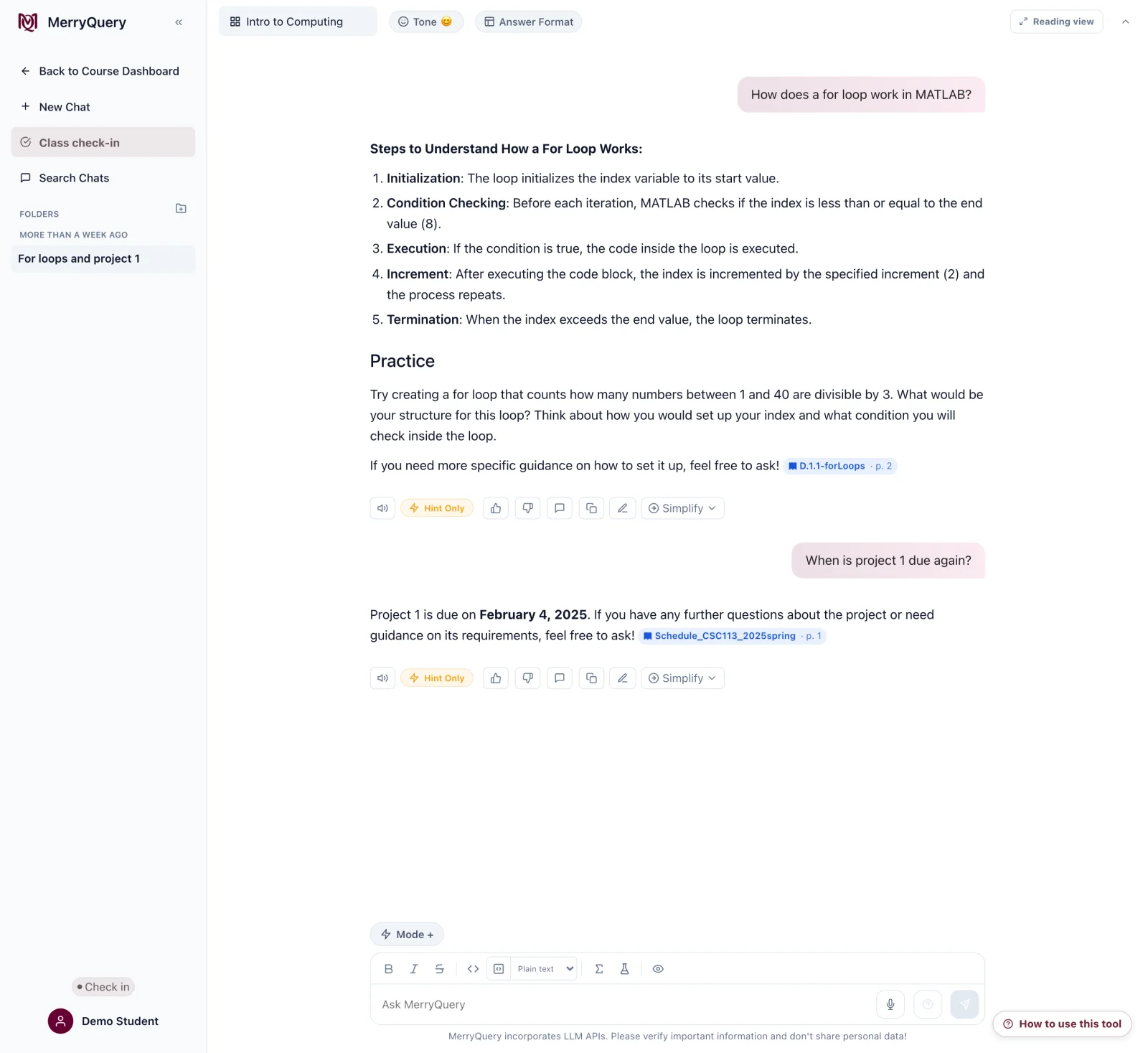
MerryQuery student chat: a five-step explanation of a MATLAB for loop with a practice prompt and a citation to D.1.1-forLoops, tagged Hint Only.
students supported across three semesters
750+
classroom tools co-designed with nine K–12 teachers
5
AAAI Best Technical Demonstration Award
2025

For students

MerryQuery answers from the materials an instructor uploads, so help matches what was actually taught: step-by-step, with a citation to the source and a chance to practice.

Study tools that come with the course

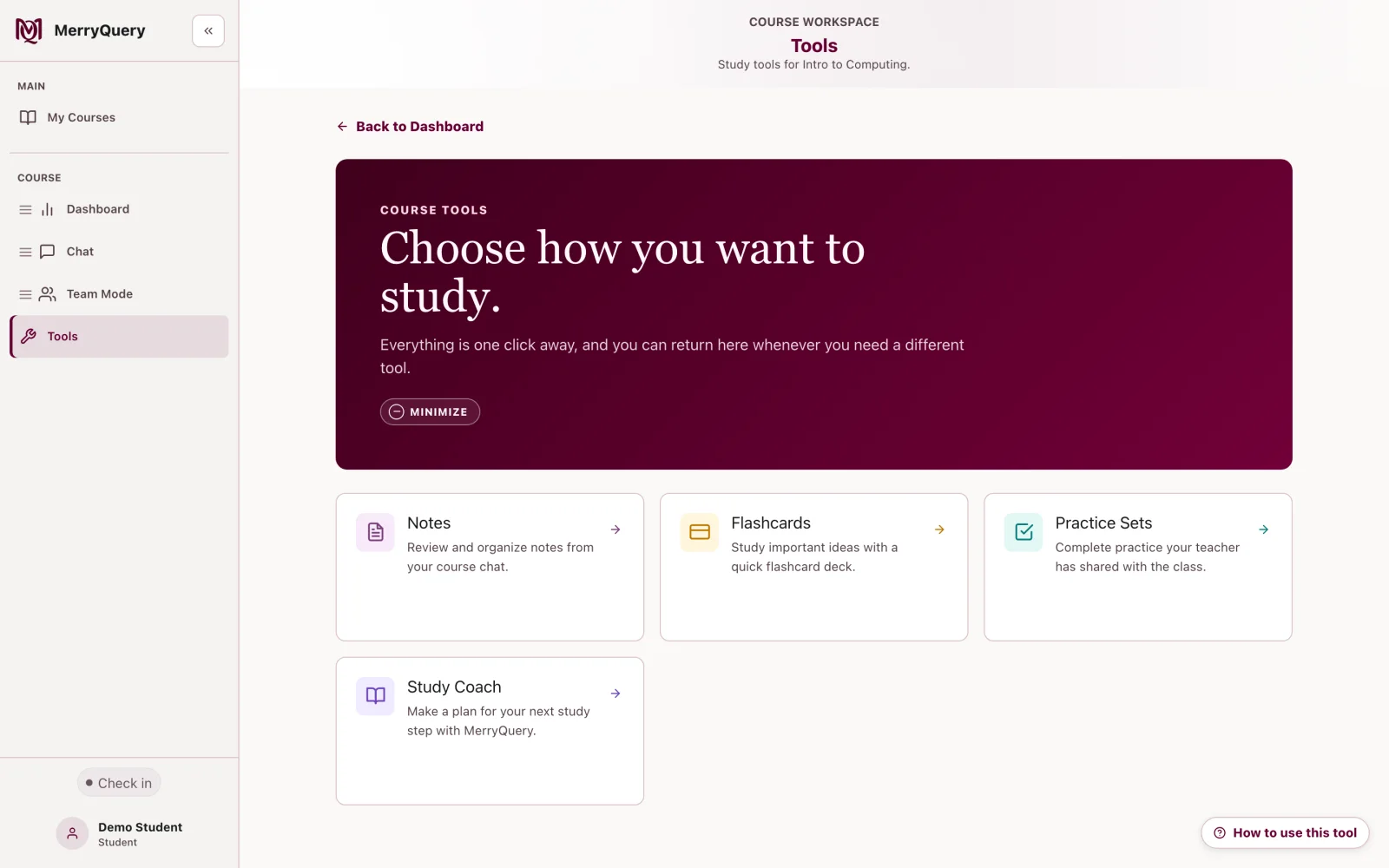
Beyond chat, students get a Study Coach that helps plan their next step, Notes from their conversations, quick Flashcards, and the Practice Sets their teacher shares. When a person would help more, MerryQuery offers to bring in a teacher or classmate.

  • Every answer is grounded in instructor-uploaded materials and cites its source
  • Study Coach, Notes, Flashcards, and Practice Sets in one place
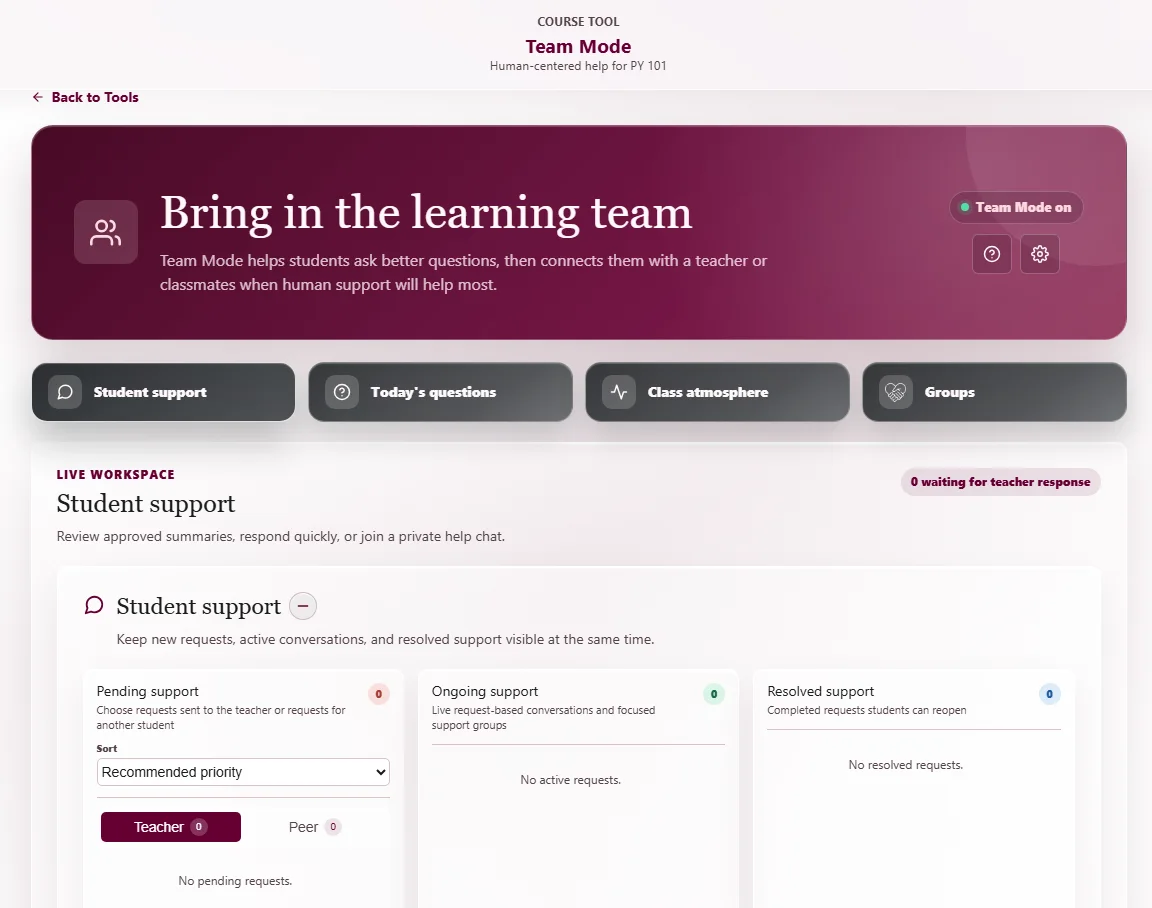
  • Team Mode connects students with a teacher or classmate without sharing their full chat
Student tools
MerryQuery student Tools page: Notes, Flashcards, Practice Sets, and Study Coach.

For teachers

Plan, create materials, give feedback, and run classroom activities from one course workspace, decide how much help the AI gives, and see where students need support.

Tools

Your course toolkit

Every course includes teacher tools that draw on the same course materials. Most were built or rebuilt in 2026 with K–12 teachers.

How they were co-designed

Planning

Prepare lessons and teaching support.

Material creation

Build course-ready learning materials.

Grading & feedback

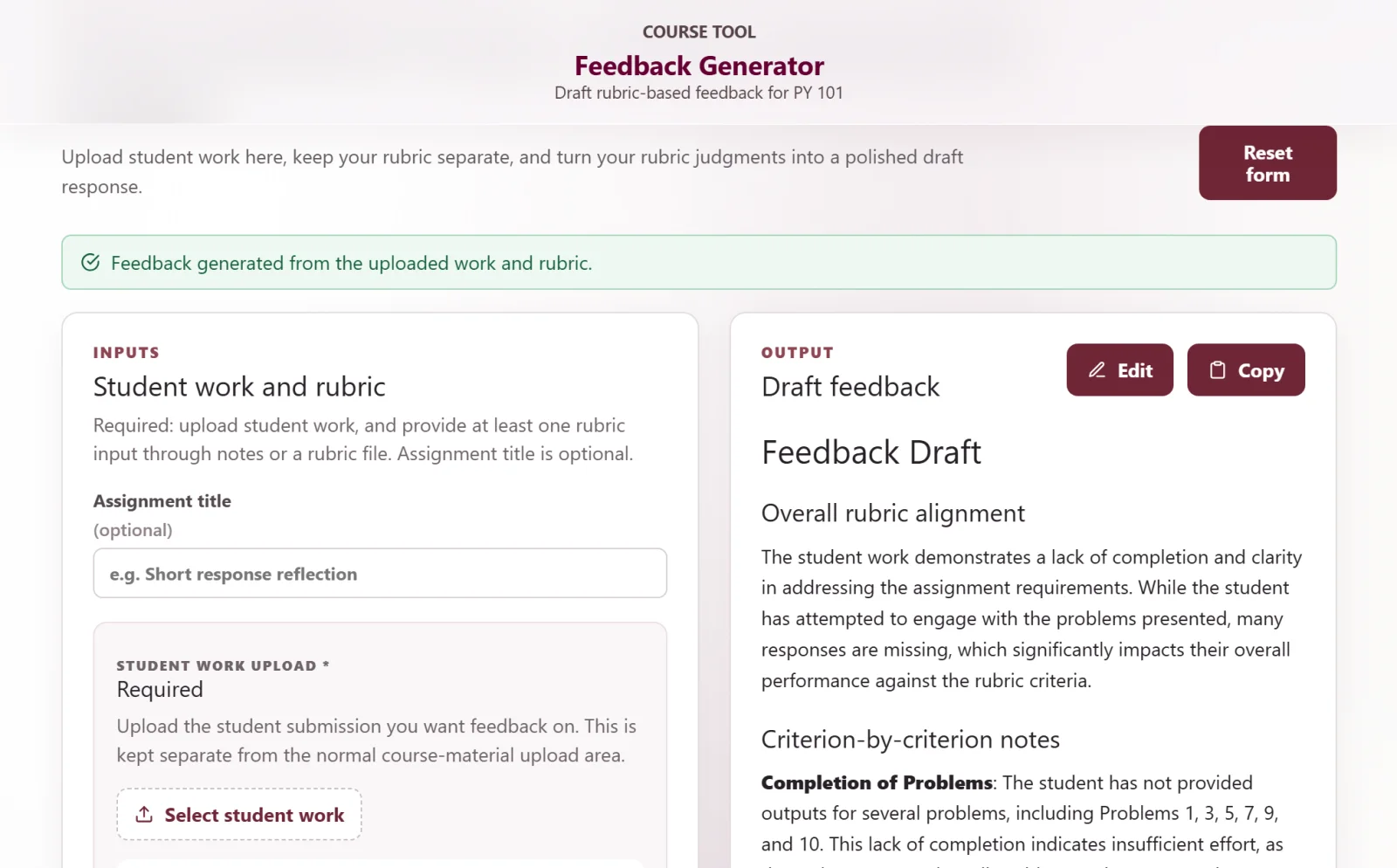
Review learning evidence and respond to student work.

Classroom activity

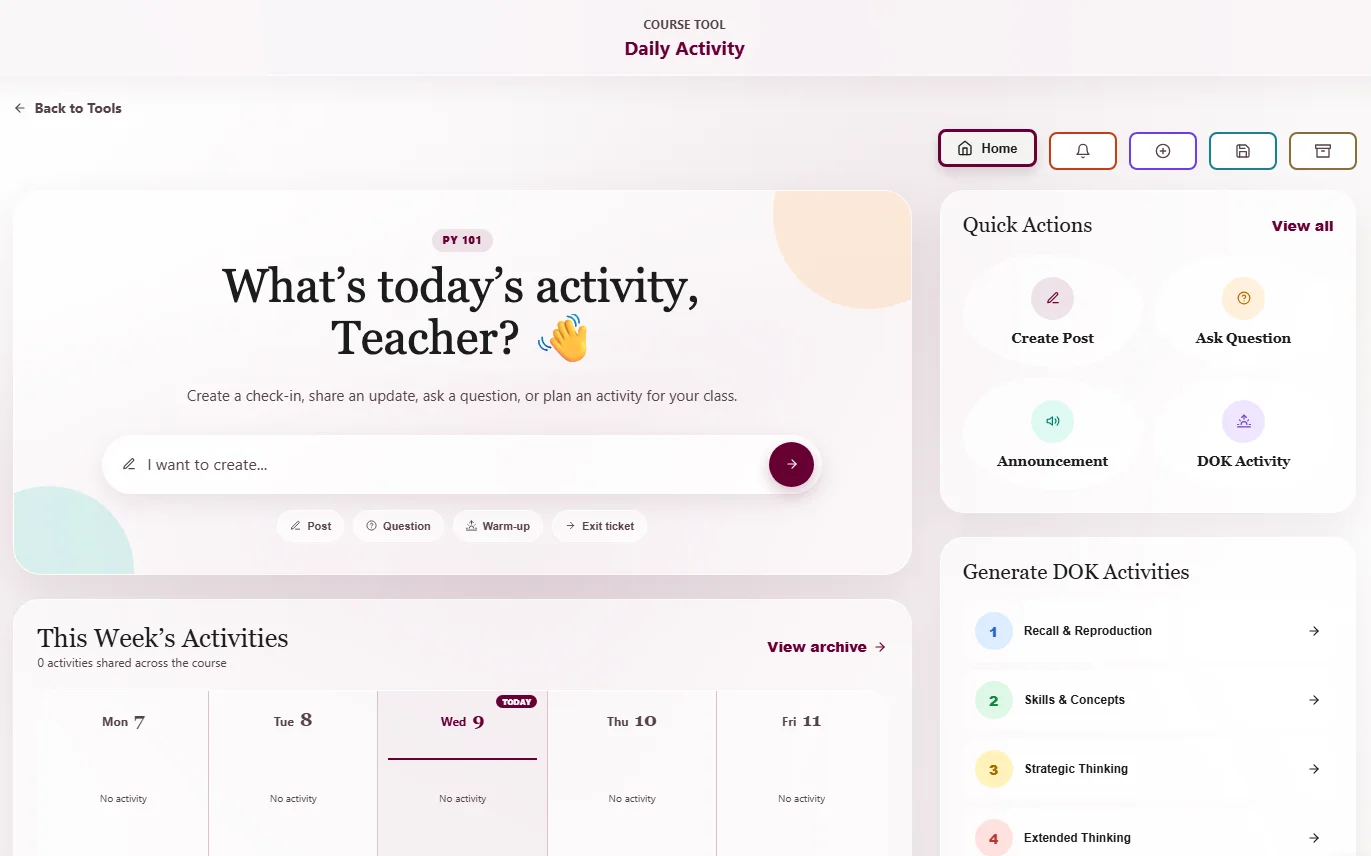
Share daily updates and coordinate live support.

Control

Set how much help the AI gives

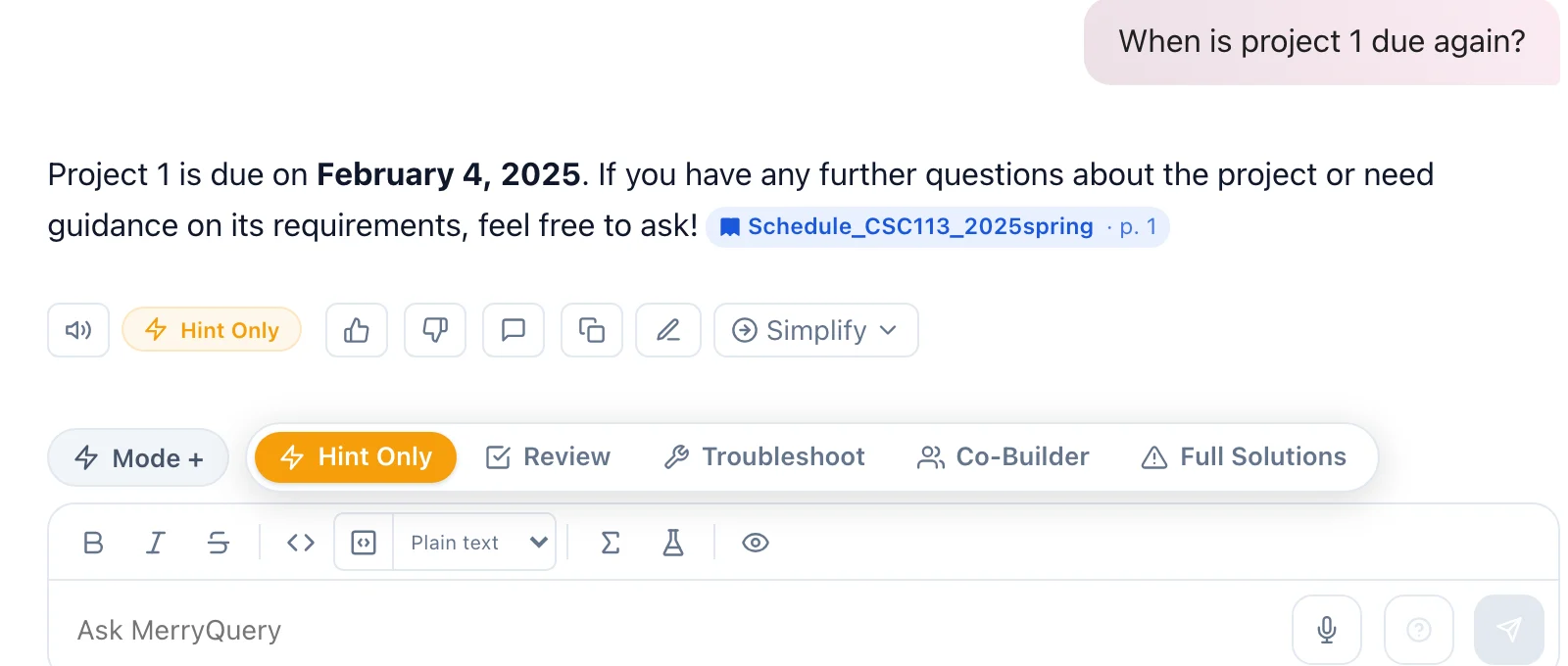
Every answer follows one of five GenAI assistance levels, from hints only to full solutions. Teachers set each assistant's default level; students can move between levels as they work, and every question is logged with the level it used.

  • Level-aware scaffolding guides students without giving answers away
  • Full solutions are marked learning-only and need the student's confirmation
  • Teachers see the level behind each student question
Student chat · Mode
MerryQuery chat with the Mode menu open, showing the five assistance levels: Hint Only, Review, Troubleshoot, Co-Builder, and Full Solutions. The answer above is tagged Hint Only.

Insight

See where students need help, while it matters

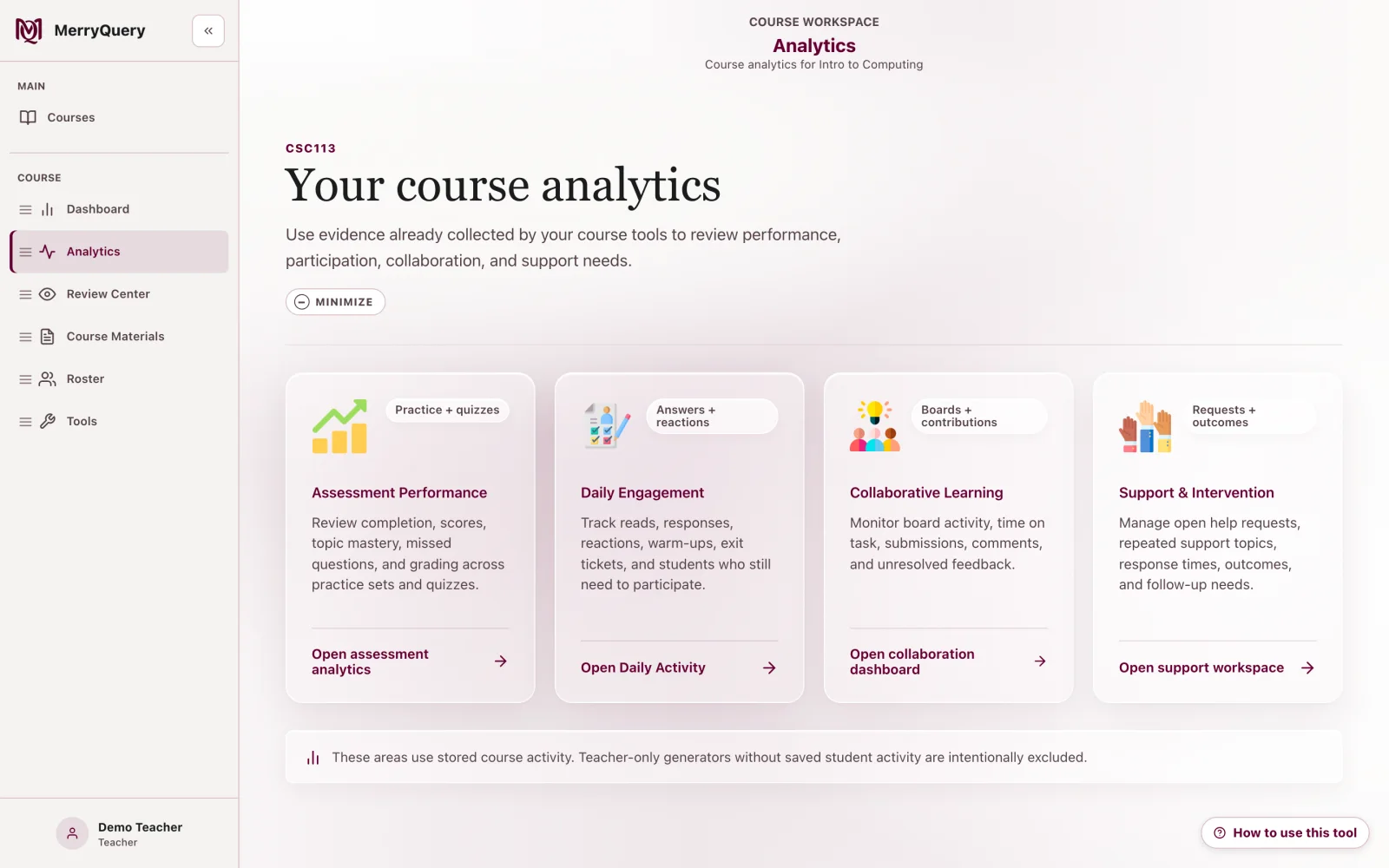
Course analytics draw on evidence the tools already collect, so teachers can review performance, participation, collaboration, and support needs in one place, and the Review Center holds the questions the AI should not answer alone.

  • Completion, scores, and topic mastery across practice sets and quizzes
  • Daily engagement and collaborative-board activity
  • Open help requests, repeated support topics, and response times
Course analytics
MerryQuery course analytics page with four areas: Assessment Performance, Daily Engagement, Collaborative Learning, and Support & Intervention.

Under the hood

Built into every course

Source citations

Every grounded answer names the course document it drew from, so students can verify it and instructors can trust it.

Multimodal course materials

Complex PDFs with code, tables, and images are processed with OCR and text mining, organized in folders, and indexed in the background.

Tone and answer format

Teachers can let students choose a friendly, formal, encouraging, or Socratic tone, and request formats such as lesson plans for their own prep.

TAs and roles

Invite TAs and graders with scoped, role-based permissions and a dedicated interface for their responsibilities.

Review Center

Look back at student conversations when it helps, and see unclear or flagged questions gathered in one place for review.

Supports research

An experiment framework supports A/B studies, assigning conditions by lab section.

Summer 2026 · NSF-funded

Teachers and developers, building together

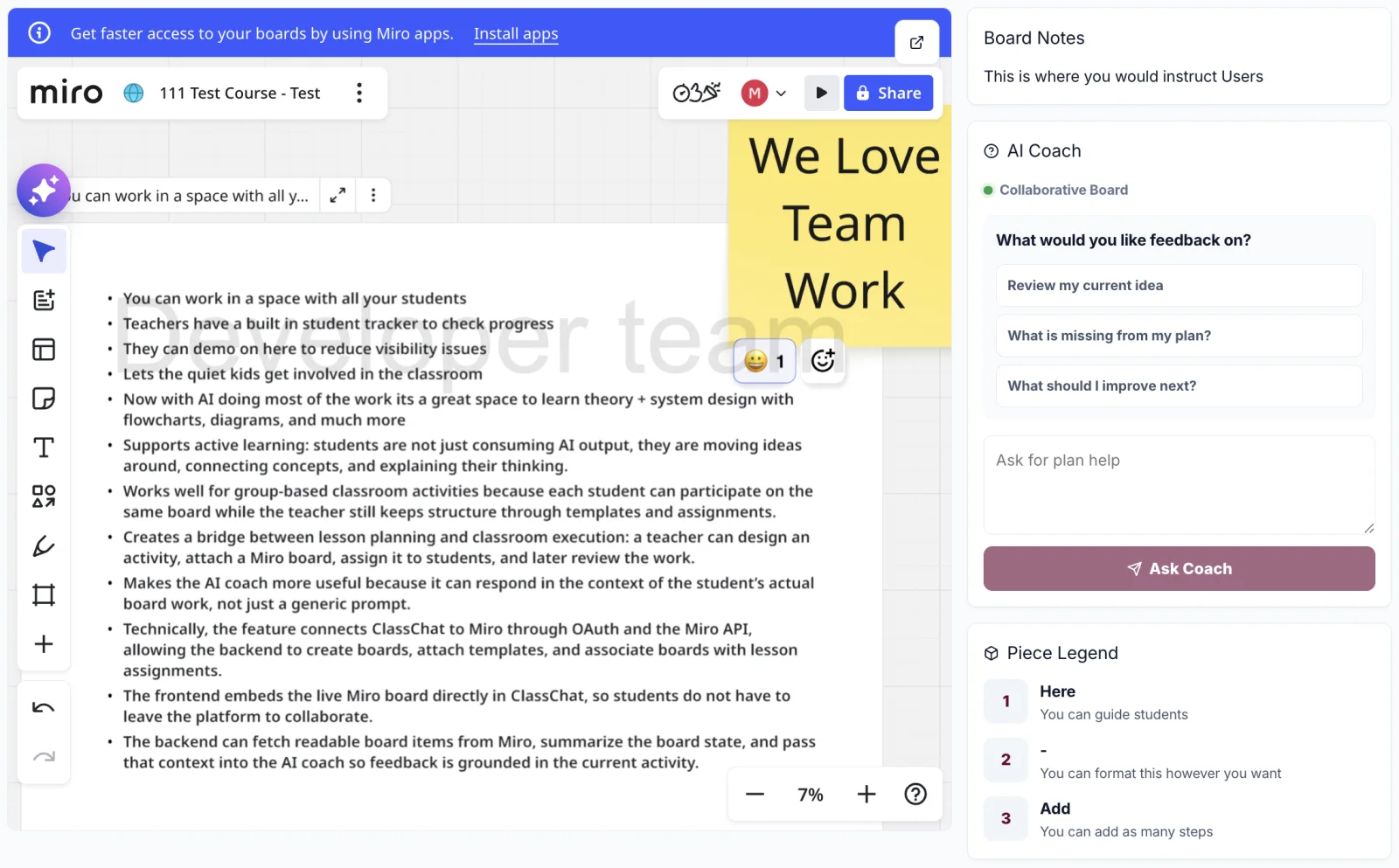
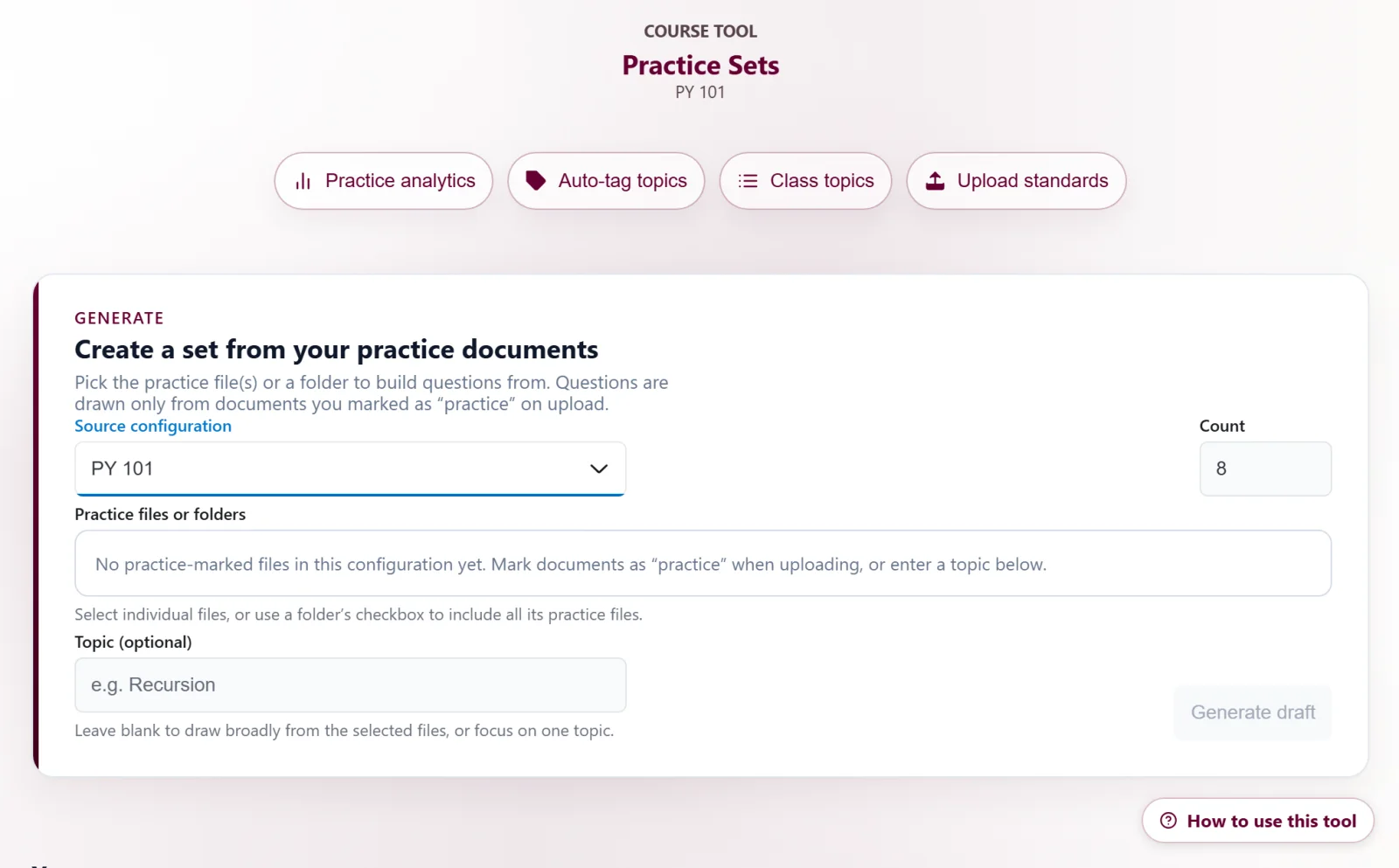
In ExLAIM, nine K–12 teachers and undergraduate developers spent six weeks turning classroom concerns into working MerryQuery tools: Team Mode, Collaborative Boards, Daily Activity, a Feedback Generator, and Practice Sets & Quizzes.

active weeks
6
K–12 teachers
9
undergraduate developers
7
classroom tools
5
Inside ExLAIM
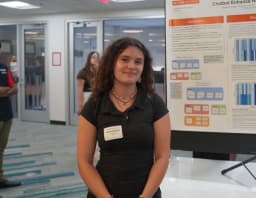
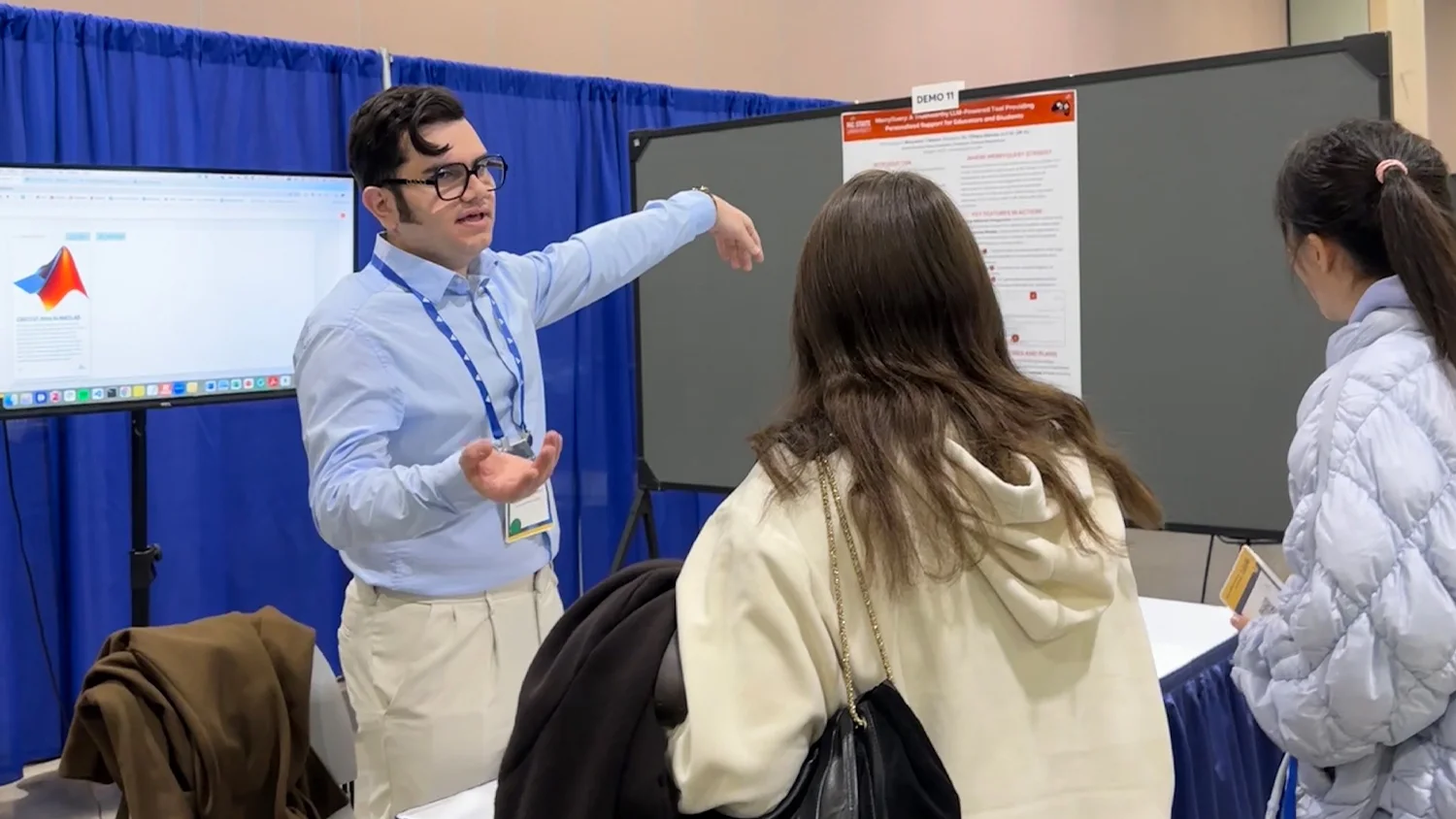
Benyamin Tabarsi explains the MerryQuery poster and live demo to two visitors at AAAI 2025.
Benyamin Tabarsi presenting the MerryQuery demonstration at AAAI-2025. Photo: NC State Computer Science.

Recognition

Best Technical Demonstration, AAAI 2025

“By balancing AI assistance with pedagogical oversight, it empowers both students and educators.”

Dr. Tiffany Barnes, Distinguished Professor, NC State
Read the NC State story

Team

The people behind MerryQuery

MerryQuery is led by researchers at NC State and Kennesaw State and built with students, instructors, and K–12 teachers.

Benyamin Tabarsi

Research Lead

Benyamin Tabarsi

Benyamin Tabarsi is a Ph.D. candidate in Computer Science at NC State, advised by Tiffany Barnes and DK Xu. His research focuses on human–AI co-intelligence. He aims to build AI that people can steer, so it helps them do more while they keep learning and growing their own skills. He designed and researched MerryQuery, and leads ExLAIM, an NSF-funded program where K–12 teachers and undergraduate developers design classroom AI tools together. In his work, he builds systems, studies them in real classrooms, and designs alongside the people who use them.

Websiteof Benyamin Tabarsi

Dr. Tiffany Barnes

Principal Investigator

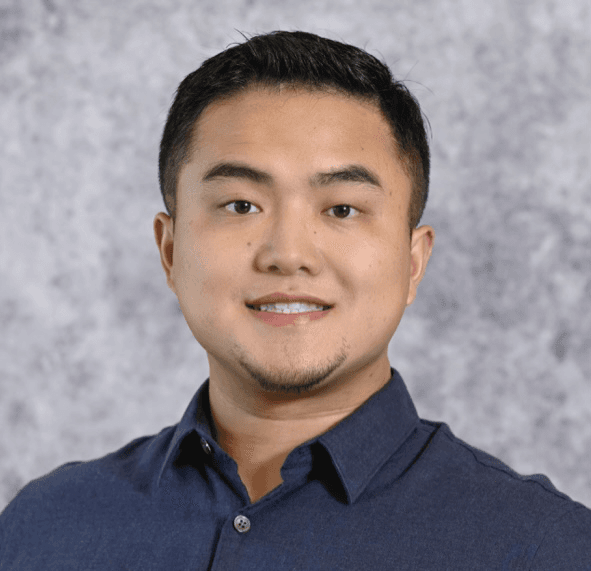
Dr. Tiffany Barnes

Tiffany Barnes is a Distinguished Professor of Computer Science at NC State, where she leads the Game2Learn Lab. Her NSF CAREER Award recognized her work using data and educational data mining to add intelligence to STEM learning environments. Her current projects include data-driven tutoring in STEM, teaching AI to middle schoolers, and helping K–12 teachers bring AI and computational thinking into their courses. She is a founding co-director of the STARS Computing Corps and an ACM Distinguished Member.

Websiteof Dr. Tiffany Barnes
Dr. Dongkuan (DK) Xu

Principal Investigator

Dr. Dongkuan (DK) Xu

Dongkuan (DK) Xu is an Assistant Professor of Computer Science at NC State, where he leads the Generative Intelligent Computing (GIC) Lab. His research studies learning in open-ended environments: how AI systems decide what is worth exploring and how they should change as experience accumulates, with a focus on efficient learning, reliable AI, and continual model evolution. His honors include the AAAI 2025 Best Demonstration Award and AAAI New Faculty Highlights.

Websiteof Dr. Dongkuan (DK) Xu
Dr. Joey Huang

Co-PI, ExLAIM

Dr. Joey Huang

Joey Huang is an Assistant Professor of Learning, Design, and Technology in NC State's Department of Teacher Education and Learning Sciences and a Co-PI and faculty mentor of ExLAIM. Trained in educational psychology and computing, she studies computational thinking, AI-enabled educational technologies, and how learners co-design with AI in STEAM. She also brought MerryQuery into her graduate course, ECI 519.

Websiteof Dr. Joey Huang
Dr. Xiaoyi Tian

Co-PI, ExLAIM

Dr. Xiaoyi Tian

Xiaoyi Tian is an Assistant Professor in the Department of Information Technology at Kennesaw State University and a Co-PI and faculty mentor of ExLAIM. Her research brings together human-computer interaction, AI, and the learning sciences to build human-centered AI that supports equitable teaching and learning, from learning companions and teacher-facing tools to AI literacy in K–12 education. She was previously a Research Scientist at NC State.

Websiteof Dr. Xiaoyi Tian
Photo of Aditya BasarkarPhoto of Daniel BricenoPhoto of Susanna QuaylePhoto of Faaz MohamedPhoto of Matheus MarquesPhoto of Lokesh SharmaPhoto of Nicole Ackerman-LoweryPhoto of Shreyas Visweshwaran16 student developers and researchers, 9 K–12 teachersSee who built MerryQuery, term by term, since 2024.
Meet the whole team